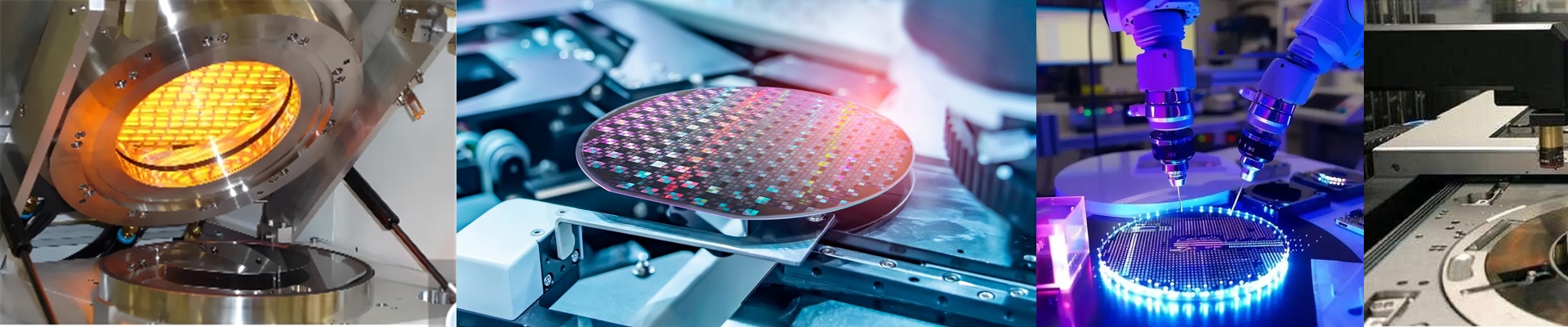

Out on the line, the separator film stack sits waiting—thin, touchy, and zero-forgiving. A single hot zone that drifts, and the film’s moisture profile shifts. You’ll see it later as pinholes, edge curl, or dimensional drift that the next lamination step simply can’t fix. With battery separator film drying, you aren’t just chasing solvent out. You’re setting the thermal budget that decides your yield. The fab doesn’t hand out margin. Class 1–100 cleanroom airflow, chemical carryover from prior wet steps, and 24/7 uptime mean thermal tools have to act like semiconductor equipment. Repeatable. Stable. Clean. Every shift. Every lot.
What matters under the hood
We built this battery separator film dryer around wafer-level thermal discipline, then adapted it for thin-film web handling. The core is an infrared emitter array, tuned for controlled, rapid energy delivery. Short-wave and medium-wave profiles are selectable to match solvent boil-off and polymer stabilization windows. The response is fast enough to track line-speed changes without overshoot, and stable enough to hold setpoint without oscillation. Temperature uniformity across the active zone is specified to ±0.1°C. That isn’t a line item on a brochure—it’s the boundary that keeps you from localized over-dry, film shrinkage, and differential stress. Repeatability from run to run comes down to setpoint recovery within seconds after door open/close events, which keeps the process window tight. The system is engineered to run clean. Internal materials are chosen to minimize outgassing and particulate generation. The exhaust path is isolated to cut re-entrainment, and the hot zone layout prevents air eddies from dumping particles back onto the film. In practice, that keeps particle counts low enough to hit stringent contamination targets for high-value films. Electrical and integration details are spec’d for fab fit: compact footprint for retrofit into existing lines, standard voltage options, and connector types that match facility infrastructure. Control interfaces line up with SECS/GEM expectations for data capture—temperature profiles, dwell time, setpoint changes, and alarms—so traceability is baked in. Energy use is part of the design, not an afterthought. Emitter efficiency and an insulated hot zone cut idle power and reduce spike demand during warm-up. That lowers operating cost per meter of film processed, especially on high-volume lines that never really stop.
Why this works in production
Drying battery separator film is the thermal bottleneck. If the dryer underperforms, the whole line slows down to protect quality: extra inspection, rework loops, and conservative speed limits. If the dryer is inconsistent, variability compounds in the next coating or lamination step. This dryer removes that uncertainty. Tight uniformity and repeatability translate directly into consistent moisture removal and stable film dimensions. You can run faster without chasing edge effects because the thermal profile across the width stays controlled. You can switch materials with less qualification effort because the system recovers quickly and holds the required thermal profile. If you’ve lived through lithography, this is the same discipline you apply to photoresist bakes—soft bake and hard bake. The film isn’t a wafer, but thermal deviation shows up just as clearly, and it hits yield just as hard. Cleanroom behavior matters. A dryer that sheds particles or creates unpredictable airflow forces you to widen contamination specs and increases scrap risk. We keep the hot zone contained and the airflow predictable, so you don’t have to trade speed for cleanliness. Reliability is an operational reality. The emitter array and hot-zone construction support long duty cycles with predictable maintenance intervals. Fewer unplanned stops. Fewer change-outs during peak production. A steadier schedule.
What you need to know
This is engineered equipment, not a bench-top heater. Installation means matching facility utilities, exhaust routing, and airflow direction to the specified orientation. Existing lines often need minor rework to align the film path and get the designed airflow isolation. Emitter tuning is application-dependent. Short-wave gives you rapid surface heating; medium-wave penetrates more evenly. The right choice depends on solvent system, film thickness, and line speed. We typically qualify both profiles during pilot integration to lock in the thermal recipe. Maintenance is straightforward, but it’s scheduled. Emitter output drifts with hours of operation, and hot-zone components need periodic inspection. Plan a routine window—weekly checks are sufficient in most high-volume settings. Treat it like any critical thermal tool in the fab: document intervals, log performance, and replace parts on trend, not on failure. If uptime is your metric, treat this dryer as part of the process stack. It will deliver repeatable thermal control only when it’s integrated cleanly, monitored with the right sensors, and maintained on a disciplined schedule. When the film comes out of the dryer, it should say one thing and nothing else: the thermal profile was met. No drift. No surprises. No scrap. That’s the standard in wafer fabrication, and it’s the same standard we bring to battery separator film drying.