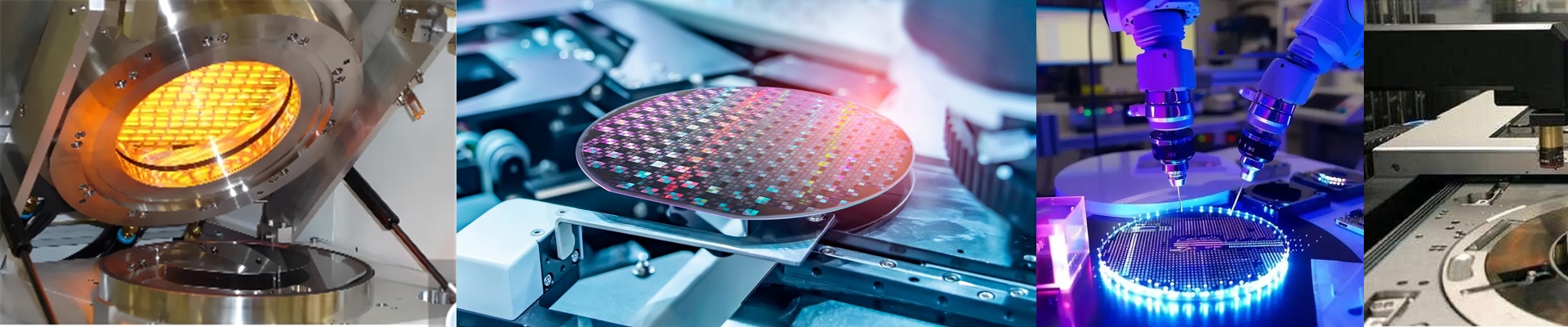
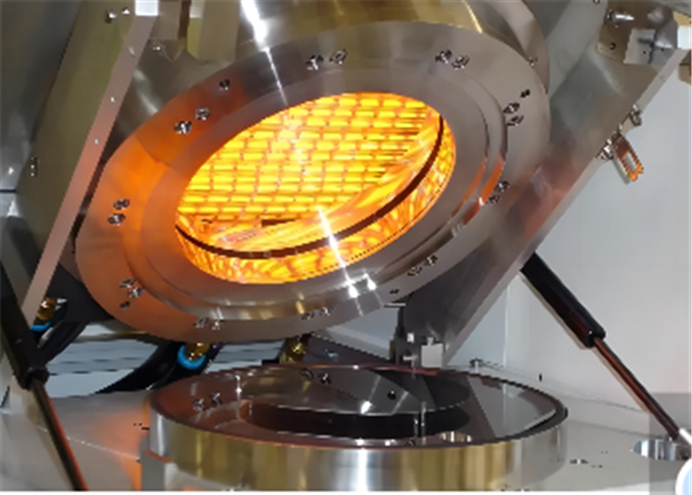
On the fab floor, thermal budget isn’t optional. You miss by a degree on soft bake, and the photoresist profile moves. Run hard bake too hot, and overlay drift shows up fast—critical dimensions slip outside spec before you know it. That’s why we built our short wave infrared (SWIR) lamps for IC around one reality: you need heat that’s fast, controlled, and repeatable, exactly where the wafer, photoresist, and lithography stack need it. What matters, technically, is how the energy lands. SWIR penetrates thin films with high absorption efficiency, heating the photoresist stack directly and keeping substrate overshoot in check. The system hits wafer-level thermal uniformity of ±0.1°C, so soft bake and hard bake profiles stay on recipe—cycle after cycle. Cleanroom compatibility is engineered in, Class 1–100. No particle generation at the lamp face, and the sealed thermal module keeps contamination out. Reliability is about uptime: these units run 5,000+ hours with less than 5% output drop, keeping 24/7 operation running without unplanned stops. In lithography cells, the lamp stabilizes the thermal profile across the wafer, cutting edge bead and tightening critical dimension uniformity after etch. Fast ramp-up shortens bake steps without sacrificing profile integrity, so you get more throughput and lower energy draw. The same precision carries over to post-apply stabilization, anneal steps, and packaging-related thermal conditioning—repeatability, lot after lot. Here’s what you need to get right on install. Match the lamp footprint and interface to the tool’s thermal port. Calibrate against a certified pyrometer so setpoints line up with actual wafer temperature. SWIR sources deliver high peak power, so confirm the tool’s power bus and thermal management can handle the transient load. Plan on periodic window inspection and cleaning. That’s what keeps uniformity consistent and prevents dose drift across the wafer.