
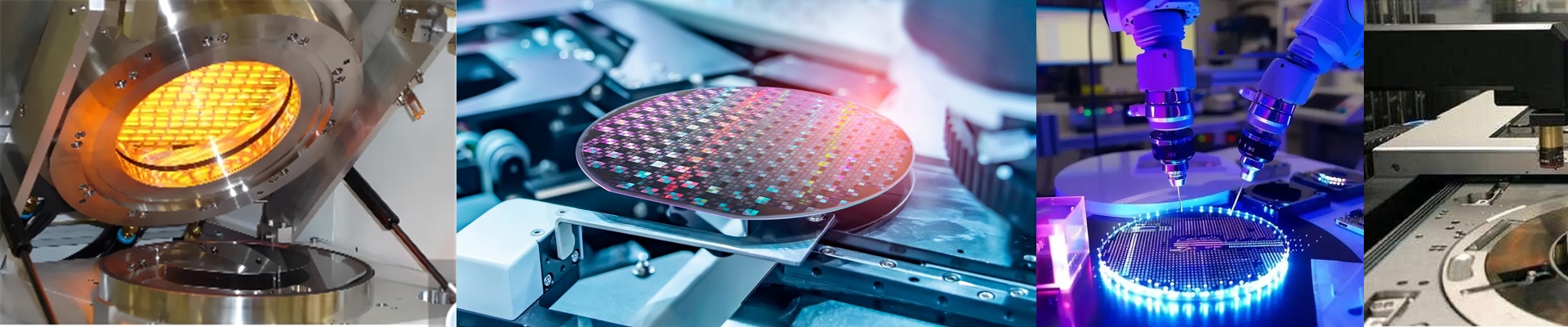
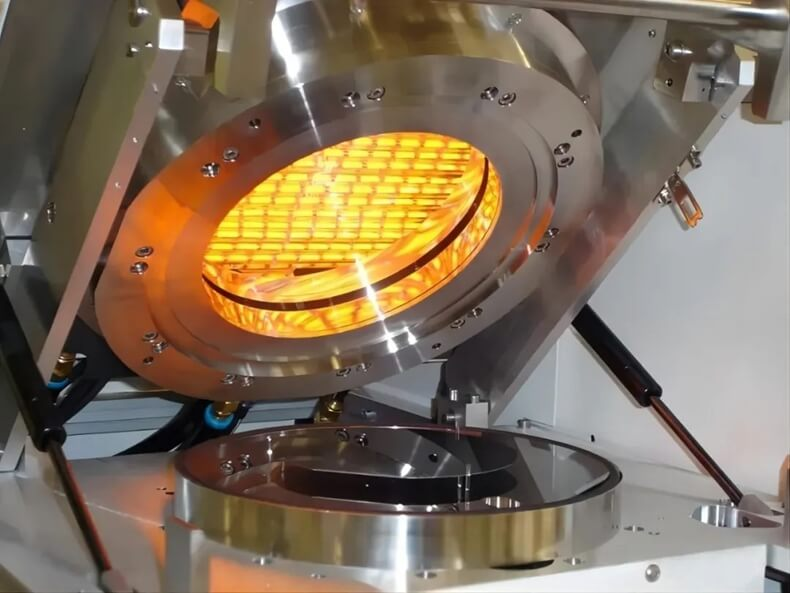
Out on the lithography floor, you learn fast that a half-degree drift in soft bake will show up as linewidth variation across the wafer. And if hard bake isn’t uniform, you get scumming that can scrap hours of work. Thermal stability isn’t a “nice to have.” It is the process. What actually matters We build heaters that meet the major semiconductor equipment standards, and we hold wafer-level thermal uniformity within ±0.1°C. The design uses short-wave infrared elements, so response is fast and repeatable. We offer quartz and carbon-fiber options, sized to your chamber geometry and voltage profile. Everything is cleanroom-compatible down to Class 1–100, with materials and seals picked to keep particle counts as close to zero as you can get. You get zero particle generation, uptime you can count on, and temperature repeatability that keeps photoresist bake profiles consistent lot after lot. Why this matters in photoresist processing Photoresist is a narrow thermal budget. Stabilizing the bake profile cuts linewidth excursions and keeps rework down. Tight uniformity lets you shorten ramp-up and soak without giving up yield, so you use less energy and trim cycle time. The units are validated against standard tool envelopes, so they drop in without re-engineering your cell. You get an equivalent replacement that keeps the line moving and reduces unplanned stops. Here are the details you’ll care about Installation tolerances are tight. Match the mounting interface, alignment, and coolant/power connections exactly, or uniformity and sensor correlation can drift. Tell us your machine brand and chamber revision, and we supply the correct connector type, leads, and termination. After the swap, verify thermal mass and retune the control loop to keep that ±0.1°C performance where it needs to be.