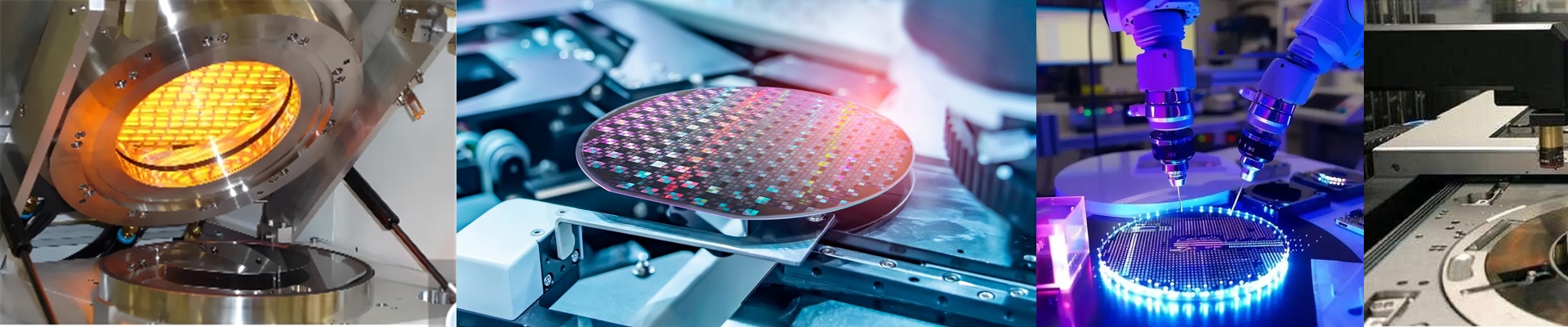

Out on the line, photoresist doesn’t forgive small drifts. Soft bake drifts by 2°C and you’re fighting solvent retention that shows up as feature distortion after exposure. Hard bake runs hot at the edge, and your etch profile starts to collapse. We put an infrared lamp on the cleanroom bench to take that variability out at the workstation. What matters under the hood The NIR lamp hits the photoresist film directly with short-wave infrared, heating the resist, not the carrier. Across the wafer, it holds target temperature within ±0.1°C uniformity, and repeatability sits at ±0.05°C bake to bake. The emitter is quartz-halogen, mounted in a Class 1–100 compatible cleanroom enclosure that doesn’t shed particles under laminar flow. Power density is adjustable for 150 mm to 300 mm wafers, and ramp rates are controlled so thin films survive both soft bake and hard bake. The system runs around the clock in fab environments with zero unplanned downtime, and output drift stays under 5% after 5,000+ hours. Here’s why it holds up in practice: the thermal precision matches what the lithography stack needs. The lamp locks in the thermal budget for soft bake, hard bake, and post-bake steps, so critical dimension control stays consistent across the lot. Tighter uniformity cuts edge defects, lowers scrap, and shortens qualification cycles. Power draw is lean, and the quick, repeatable response makes changeovers faster without trading off bake profiles. A couple of field realities. The lamp needs a dedicated cleanroom power circuit and EMI-clean cabling so it doesn’t couple into exposure tools. When you switch wafer sizes, budget a short warm-up and run a thermal soak calibration. The emitter runs hot and high-output, so handle it under cleanroom protocol; we include a field swap kit so scheduled maintenance doesn’t drag out.